★★★★★
"RDS Portal gave our distributed team one predictable route to assigned desktops. Onboarding is clearer, and users know exactly when to contact the service desk."

RDS Portal provides a clear starting point for authorized access to Windows desktops and applications published by an organization. This independent fan guide explains how an RDS login moves from the browser through identity, gateway, broker, and session-host controls, without collecting credentials or pretending to be an official sign-in service.
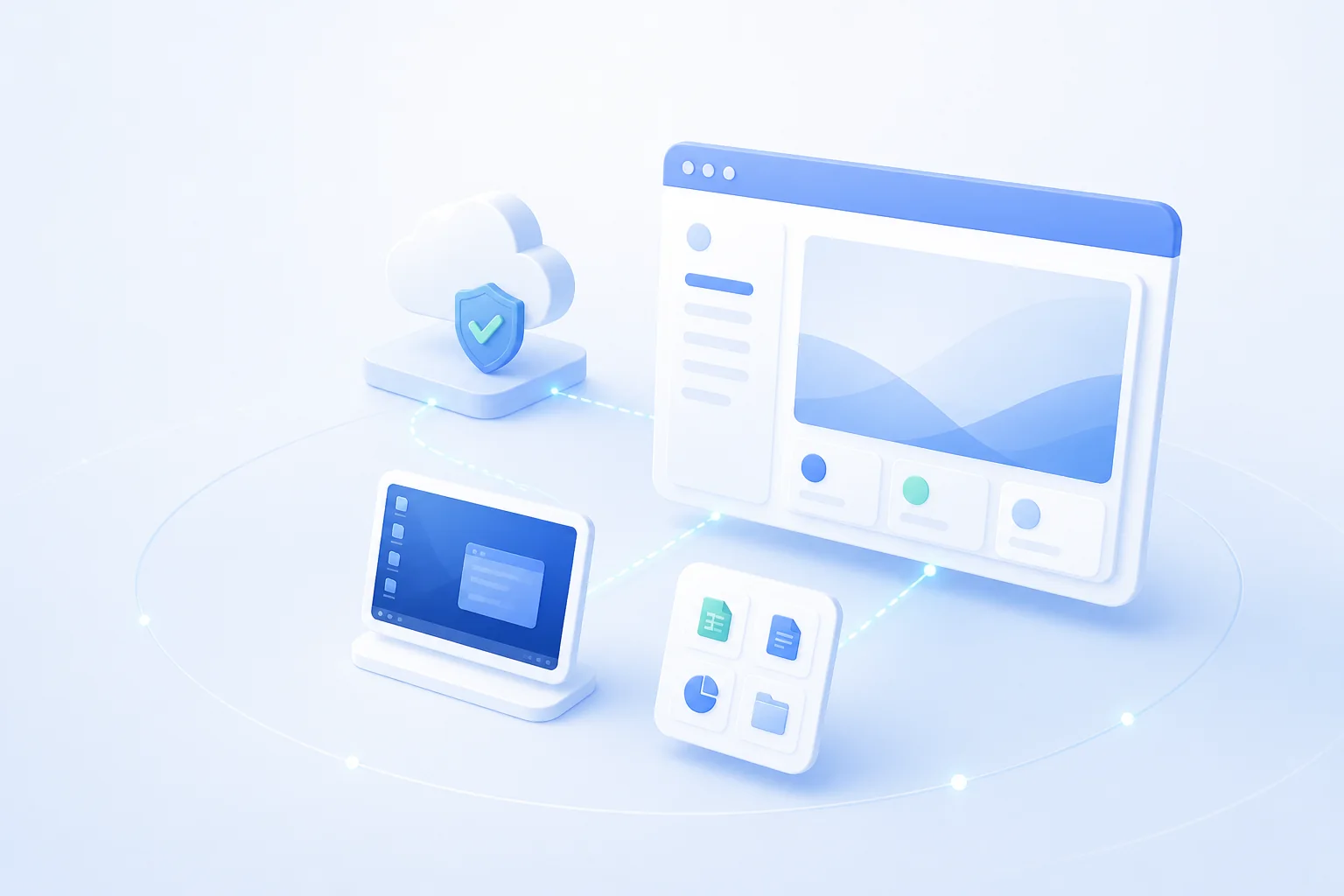
Publication, identity, and transport must agree before a usable Windows workspace can appear in a browser.
RD Web Access presents only the RemoteApps and desktops assigned to the signed-in account. An empty workspace can reflect collection membership or publication policy rather than a browser rendering failure.
The deployment evaluates the username format, group membership, gateway rules, password state, and any additional identity controls. A correct password alone does not guarantee authorization to a published resource.
The browser carries display updates and user input while applications continue to run on a session host. Policy determines whether clipboard, audio, printing, or file exchange is exposed to that browser.
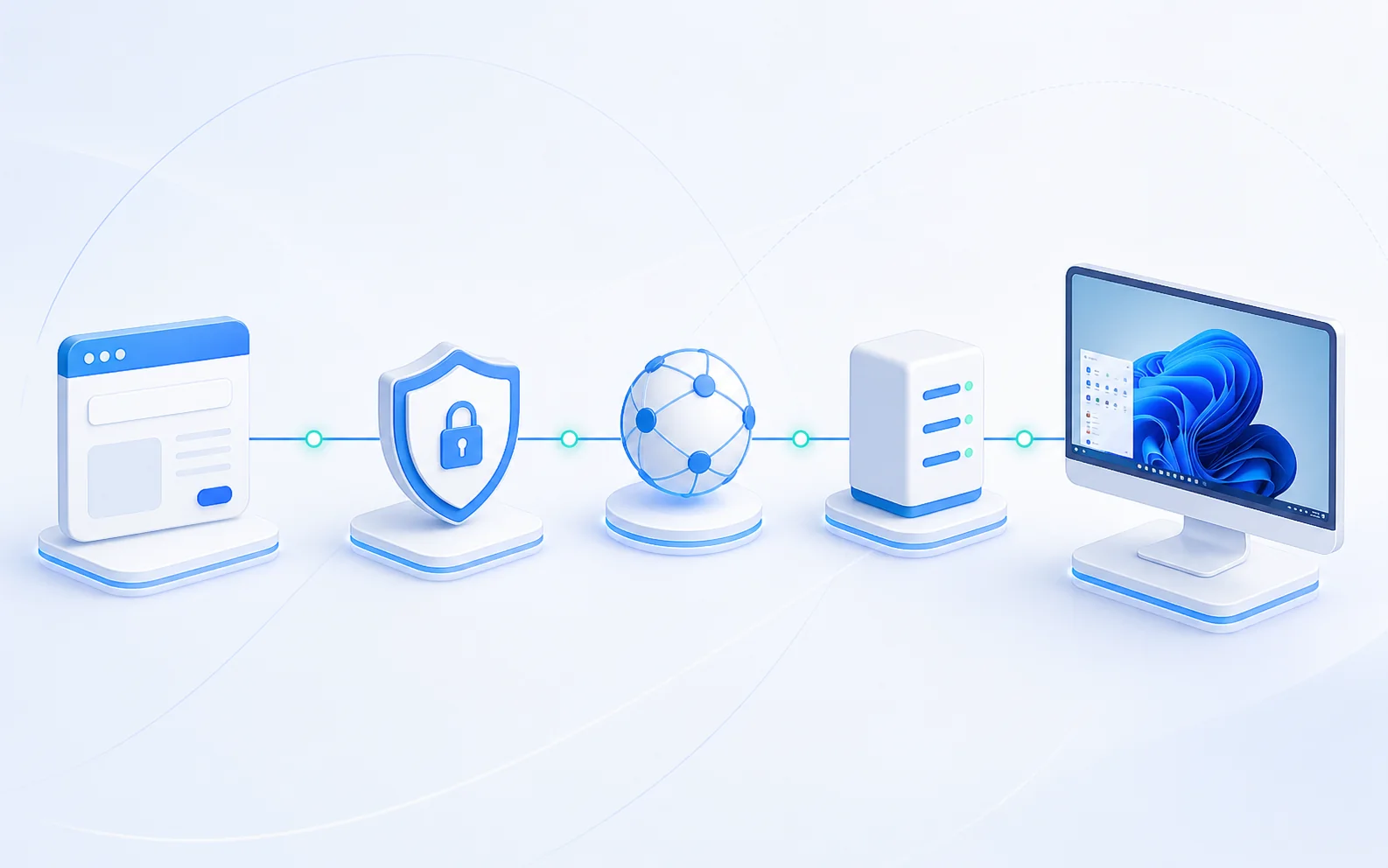 A managed
service path
A managed
service pathIn a Remote Desktop Services deployment, RD Web Access lists published resources, RD Gateway protects the external route, RD Connection Broker directs requests, and a session host runs the desktop or application. The user opens one controlled HTTPS address instead of exposing every host to the public internet.
That model gives administrators a clean control point. They can withdraw an assignment, update a certificate, replace a session host, or change a collection without teaching every user a new server address. The portal does not create permission; it reflects permission already granted inside the managed environment.
Begin only from the complete URL provided by IT. Check the HTTPS hostname and the organization named on the page before entering credentials. An unexpected certificate, unfamiliar domain, or new request for sensitive information is a reason to stop and verify the destination through a separate trusted channel.
Start with a current supported browser and the trusted portal bookmark supplied by the organization. Before launching a resource, decide whether the task genuinely needs local clipboard, file, audio, or printing access. Each approved capability creates a controlled bridge between local and remote data, so unnecessary permissions should remain disabled.
Inside the session, browser and Windows keyboard shortcuts can compete. Full-screen mode may change where a shortcut is delivered. Display scaling can improve readability, while a very large viewport on a slow connection may increase visual delay. Change one setting at a time and note which adjustment improves the result.
Finish with Windows sign-out when work is complete. Closing the tab can leave a disconnected session running with its applications still open. That behavior is useful only when policy permits reconnection and the user intentionally plans to return.
Confirm the URL and certificate before authentication.
Approve only the redirection features needed for the task.
Sign out to end work; disconnect only when a return is planned.
Capabilities vary by deployment and policy, but the delivery model creates clear practical differences.
| Decision point | RDS Portal | Installed RDP client | Consumer remote-control tool |
|---|---|---|---|
| Local preparation | Supported browser and trusted URL | Client profile configured locally | Vendor agent or account is common |
| Resource delivery | Central list of assigned desktops and RemoteApps | Connections often stored separately | Devices listed by vendor console |
| Windows Server alignment | Designed for managed RDS collections | Deep RDP protocol feature set | General screen-control model |
| Temporary computer use | No permanent client profile required | Settings can remain on device | Installation may be restricted |
| Administration | Publishing and access controlled centrally | Strong endpoint controls | Depends on vendor plan |
| Best fit | Browser entry to organizational Windows resources | Advanced and frequent RDP work | Ad hoc cross-platform support |
The web client is especially useful when centrally published resources and low client-side setup matter more than the richest possible peripheral support.
These fictionalized reviews illustrate typical outcomes and are not vendor endorsements.
"RDS Portal gave our distributed team one predictable route to assigned desktops. Onboarding is clearer, and users know exactly when to contact the service desk."
"The RDS Portal guidance made session state easy to understand. I now sign out after work and reconnect only when I intentionally leave an application running."

"Our RDS login tickets became more useful after the team adopted the staged checklist. We can separate portal, identity, gateway, and host symptoms quickly."

rds-login.org is a fan-created educational site about RDS Portal. It does not operate an RD Gateway, publish desktops, issue accounts, recover passwords, sell licenses, or receive Windows credentials. A real portal address must come from the organization that owns or administers the remote resources.
The phrase RDS login appears in informal searches for browser access, but it is not a separate product. On this site, RDS Portal refers to browser access used with supported Remote Desktop Services infrastructure. Cloud desktop services can have different portals, applications, and lifecycle notices.
Confirm browser support, server versions, certificates, licensing, and current Microsoft guidance before changing production systems. Our material helps readers ask precise questions, document symptoms, and choose safer defaults within an environment they are authorized to use.
Essential answers about browser access and this independent site.

It opens desktops and RemoteApps that an administrator has published and assigned to your identity. It does not discover arbitrary internet computers.
The employer, school, provider, or administrator operating the deployment supplies its exact portal address through a trusted channel.
No. This fan site is not connected to any deployment and never asks for remote credentials. Use only your verified organizational portal.
The account may lack a collection assignment, publication may be incomplete, or the wrong identity or portal may be in use.
Some deployments provide controlled file-transfer features. Browser capability and administrator policy decide availability, and users should approve access only when needed.
Use Windows sign-out to end the remote session. Close the browser tab only when an intentional temporary disconnect is permitted.